I may have made the world’s worst safety demonstration. There were banana fingers, water balloons, deliberately induced kickbacks, and an angle grinder that had absolutely no business wearing a circular saw blade.
We had a lot of fun. I was also genuinely nervous, which seems like a reasonable response to intentionally doing things I know I should not do.
Underneath the ridiculousness was a serious question: what actually happens between a cut feeling wrong and a hand reaching the blade? A camera capturing up to 80,000 frames per second makes that sequence visible. Unfortunately, it can also make an accident look like something you have time to escape.
These were deliberately unsafe demonstrations, not techniques to copy. We removed or disabled safeguards for some of the experiments. Keep your safety equipment in place, follow your tool’s instructions, and do not recreate these setups.
Table Saw Kickback Is More Than a Flying Board
Table saw kickback deserves more attention than it gets. The basic mechanism is simple: as a board passes the blade, it twists or catches the rising teeth at the back. Those teeth can lift the wood and throw it back toward the operator.
The speeds involved can be terrifying. A board launched at an estimated 100 to 150 mph is not something you want meeting your face, neck, or torso. We did not measure projectile speed in these experiments, but the violence was obvious.
What scares me even more is what can happen to the hand pushing the wood.
Imagine applying a lot of pressure to get a stubborn board through a cut. Suddenly, the board disappears from underneath your palm. Your pushing force has not disappeared with it. Your hand can continue forward and down into the blade.
That is the part I wanted to demonstrate. Plenty of kickback examples show wood flying across a shop. The less obvious danger is how quickly the operator’s hand can follow a completely different path.
There is a well-known kickback demonstration in which a woodworker nearly pulls his own hand into the blade while trying to explain the hazard. I have a lot of respect for his willingness to share that mistake. Swallowing your pride so somebody else might avoid an injury is worth something.
My concern was becoming the next guy making that point, except in extremely expensive slow motion.
What Our Banana-Hand Experiment Revealed
For an earlier slow-motion experiment, we used ballistic hands. Those were a little too convincing for some people, so this time we went with bananas. Still five fingers, considerably more fruit salad.
The bananas rested on a board, standing in for the hand pushing the workpiece. A long wooden stick kept my actual hands farther from the action. The riving knife was removed, and the SawStop brake was disengaged for the experiment. Those changes made the setup more dangerous, not more educationally correct.
Even knowing what we were trying to cause, I had trouble committing to it. Wanting something terrible to happen to a bunch of bananas is one thing. Standing next to the machine responsible is another.
The warning came before the launch
This was the first table saw kickback I had personally experienced. The surprising part was how wrong the cut felt before anything dramatic happened.
In an actual woodworking situation, that is the point to stop feeding the workpiece and shut the saw off. Not push harder. Not convince yourself that you are almost finished. Stop.
For the demonstration, I kept going. Eventually, I started thinking the board was not going to kick back at all. It seemed to be getting through the blade.
Then it launched.
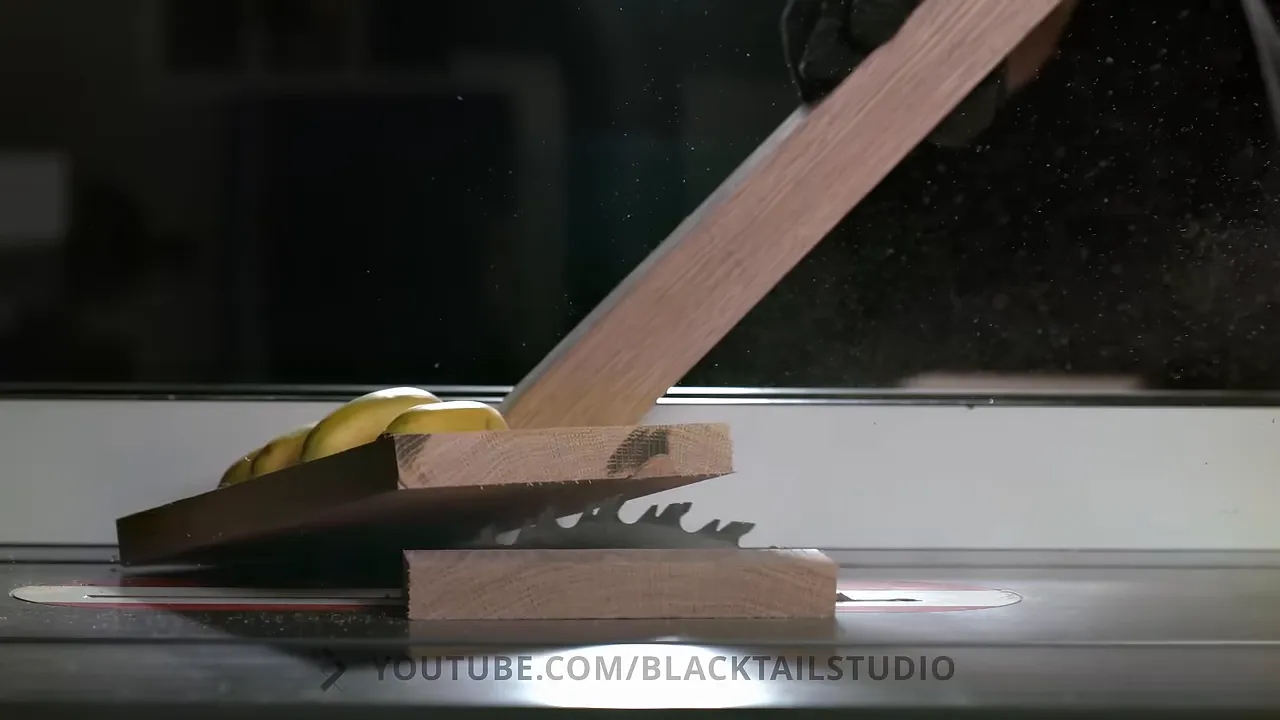
In that first attempt, the banana hand survived. Another kickback was violent enough to send the board up into a tree, yet the bananas were still largely safe. At normal speed, the launch happened so quickly that I barely registered it.
That distinction matters: a dramatic kickback does not always produce the same hand movement. The outcome depends on what the workpiece and the hand do as support disappears. A surviving banana is not proof of a safe setup.
When the “fingers” reached the blade
A later attempt finally showed the sequence I had been worried about. The blade snatched the board away, the bananas dropped onto the table, and the fruit moved across the exposed teeth.
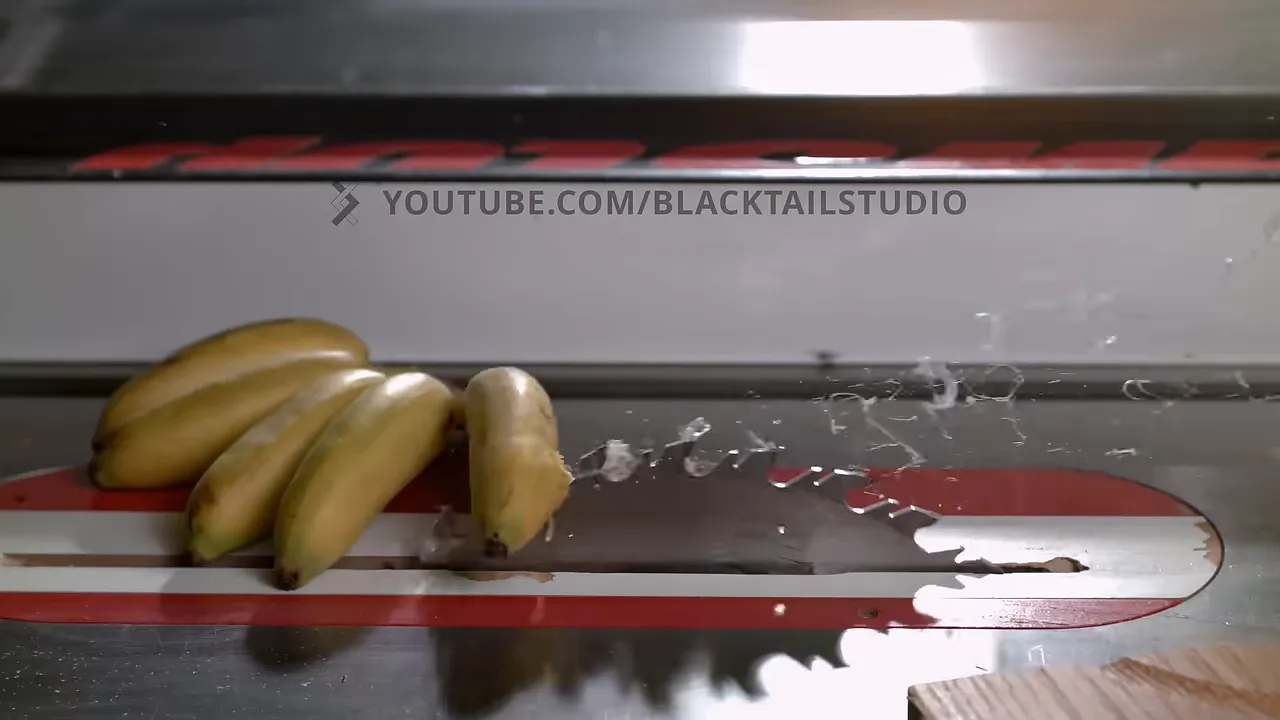
It was unpleasant enough with fruit. A real hand could fare much worse because our model did not include somebody leaning into the cut with their upper-body weight. We had the weight of the bananas, not the force of an operator trying to overpower a binding board.
This was a visual demonstration of the mechanism, not a precise model of a human injury. Still, the lesson was hard to miss.
The entire destructive event took roughly two-tenths of a second at normal speed. Stretch it out with a high-speed camera and you can study each movement. Run it at full speed and there is essentially no time to process what happened.
Slow motion helps explain an accident. It does not show how much reaction time you would have.
How I Reduce Table Saw Kickback Risk
The useful response to all this is not necessarily to abandon your table saw. It is to avoid creating the conditions we deliberately created.
- Keep the riving knife installed for appropriate cuts. It helps keep the workpiece from closing on the blade or contacting the rising rear teeth.
- Keep the board properly controlled against the fence during a rip cut. Guiding pressure should maintain fence contact, not steer the board sideways into the blade.
- Do not rip a piece that is wider than it is long against the rip fence. That short bearing surface makes it easier for the workpiece to twist. Use an appropriate crosscut setup instead.
- Use a suitable push stick or push block. Your fingers should not be the last thing guiding the workpiece past the blade.
- Stop when the cut feels wrong. Increased resistance is a reason to shut down and investigate, not apply more body weight.
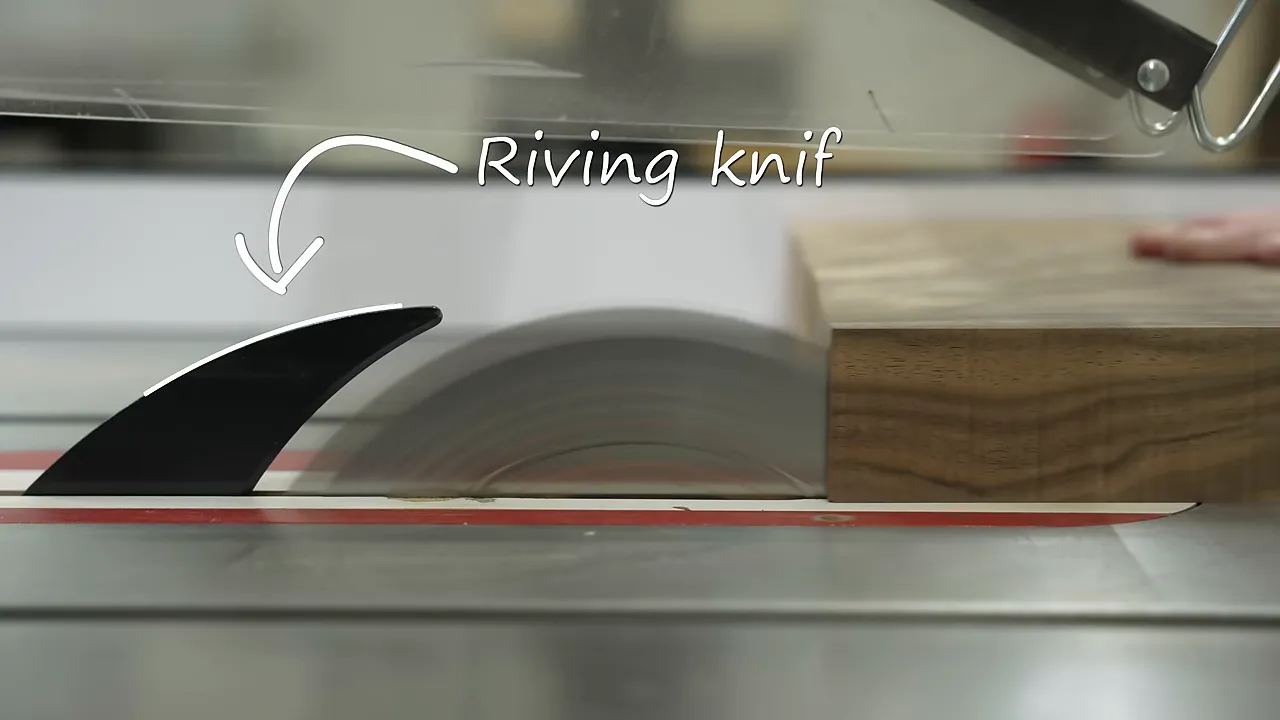
The riving knife is especially important here because removing it helped make our demonstration possible. It is not an inconvenient accessory that happened to be missing. It is a safeguard addressing the very failure we were trying to create.
These points are not a complete operating procedure. Your machine’s manual comes first, and OSHA’s woodworking safety resources offer additional context on machine hazards and guarding.
Miter Saw Kickback: Different Motion, Same Need for Distance
A miter saw feels less intimidating to me than a table saw. That does not mean I want my fingers anywhere near its blade.
For this experiment, the banana fingers sat on a small block close to the cut. The miter saw’s blade guard had been removed for the demonstration, another modification that should not be copied.
The kickback was worse than I expected. The block moved violently, and the bananas bounced around beside the blade. They appeared to graze its side rather than being pulled straight through the cutting edge.
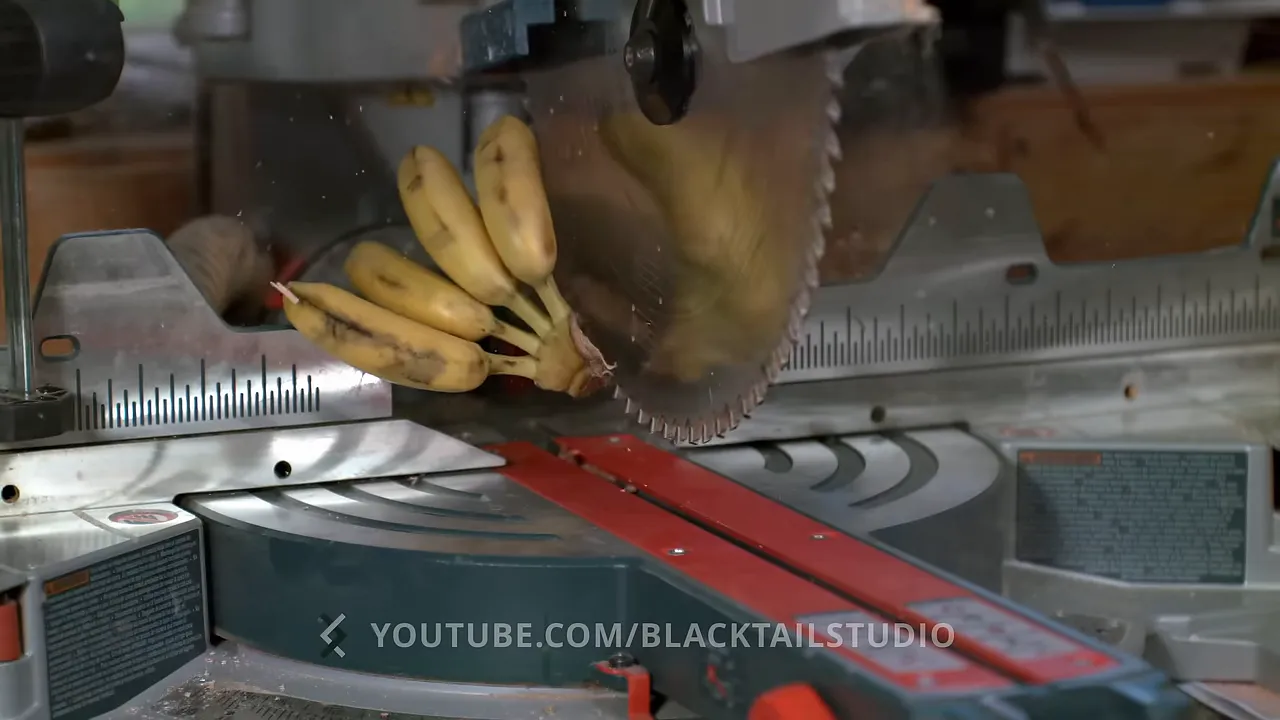
In this particular test, the motion did not look like the table saw actively pulling the stand-in hand through the teeth. But starting with fingers about an inch from a spinning blade and hoping they only brush its side is not much of a safety strategy.
We also tried a cucumber standing in for an appendage beside a small block. The point was the same: if controlling a little piece requires putting part of yourself right next to the blade, rethink the cut.
A better way to cut small pieces
For the little wood blocks used in these demonstrations, I would avoid the miter saw altogether and use a table saw with an appropriate crosscut sled.
Even then, clamp the small workpiece down rather than holding it with your fingertips. Changing machines does not help much if your hand is still doing the dangerous part.
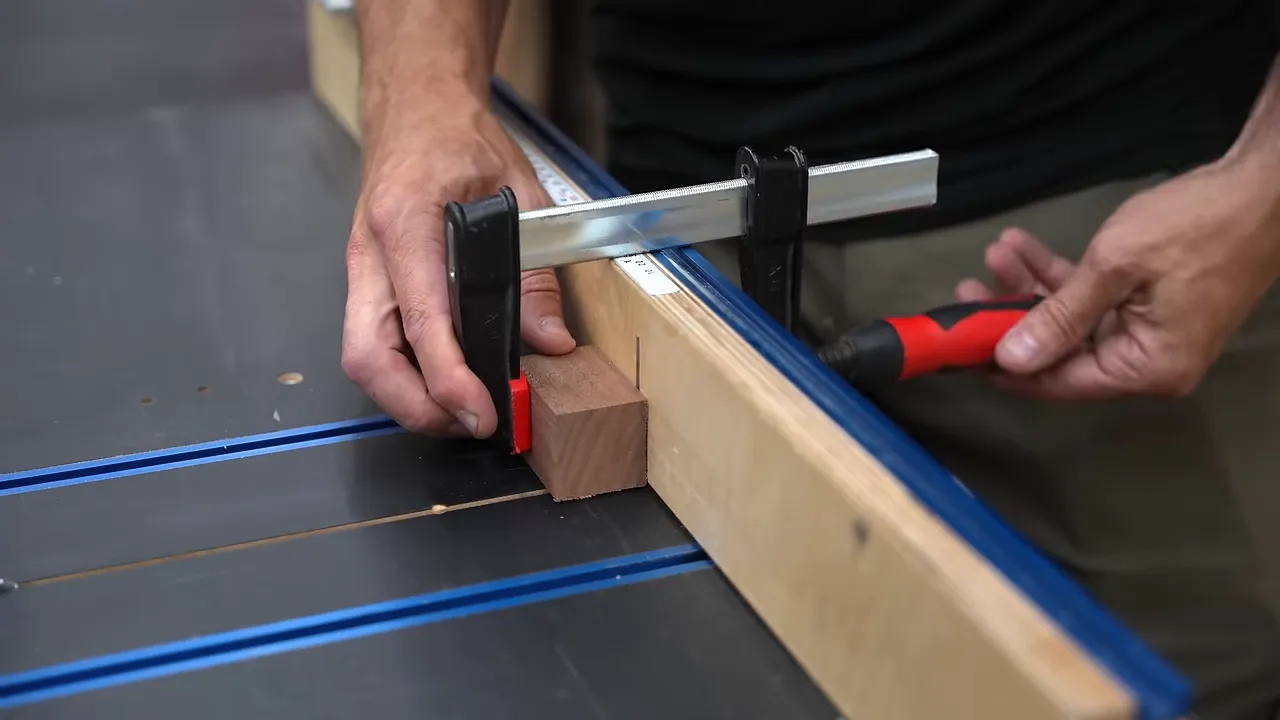
When I do use the miter saw, I keep my fingers well away from the blade and use a hold-down clamp whenever the setup allows it. Securing the workpiece mechanically is a much better plan than trusting a fingertip grip on something small enough to disappear under the blade.
The Water Balloons Were Not a Woodworking Technique
At some point, the serious demonstrations turned into cutting water balloons on the miter saw.
I cannot tell you whether that came from my inner 10-year-old wanting to know what would happen or from the fact that I have never particularly liked that saw. Probably some combination of the two.
The first balloon opened in a bizarre way. In slow motion, the blade seemed to split the water itself before everything collapsed into a spray. Naturally, that led to a second attempt with a quicker downward motion.
The result looked very cool. The cleanup looked considerably less cool.
There is no practical cutting recommendation hiding in this part. Water balloons do not belong on a miter saw, and making a power tool wet for an interesting image is not a shop practice worth adopting. The practical advice remains the boring stuff: secure the wood, keep the guard in place, and keep your hands away.
An Angle Grinder With a Saw Blade Is Still a Terrible Idea
Our slow-motion specialist, Chris, helped us finish the main demonstrations faster than expected. That left extra camera time and more tools available, which is not always a responsible combination.
We started with an abrasive-wheel grinder experiment. At 80,000 frames per second, high-speed tools are fascinating even when the result is less violent than expected.
Then I made the angle grinder more violent by putting a circular saw blade on it.
Do not attach a circular saw blade to an angle grinder. This was misuse of the tool, not an unconventional woodworking tip.
The grinder immediately demonstrated how little control we had over the situation. On one attempt, it took off as soon as it received power. Attempts to restrain it with clamps were hardly reassuring.
Eventually, it cut the bananas. Our grand scientific conclusion was that a circular saw blade attached to an angle grinder will, in fact, cut fruit. That does not make the attachment safe, useful, or worth trying.
We finished the camera session with another water-balloon shot. When a camera rental costs $10,000 for 48 hours, apparently my instinct is to squeeze every last ridiculous image out of it. That explains the motivation. It does not justify the setup.
The Safety Lesson Worth Keeping
The entertainment was meant to make the consequences memorable. The banana fingers were funny until the board vanished and they crossed the blade. The miter saw seemed manageable until the little block jumped. The angle grinder was a bad idea before it ever received power.
The most useful moment, though, happened before the first kickback. I felt that the cut was wrong.
In a real project, I would stop there. There is no board valuable enough to justify forcing a cut that is telling you something is wrong, and no finished piece worth trading your fingers for.
A Brief, Not-So-Subtle Note About the Cast Iron
After covering the saw in banana, I did appreciate having treated the cast iron with N3 Nano. That was my perfectly organic transition into mentioning a product I use, love, and happen to own the company behind.
Joking aside, N3 Nano has changed both how I finish tables and how comfortable I am using them afterward. I use it on new projects, existing furniture, and cast-iron tool surfaces. Its resistance to beer, wine, and everyday stains is a big part of why I started the company.
Protecting a tabletop is useful. Protecting the hands that built it is still the more important job.
|


