Fourteen months is enough time to find out whether a shop idea actually works or just looked clever when you were drawing it.
Some things in this shop have been fantastic. Some expensive tools are just okay. And a few decisions, like insisting on a wall-mounted vise, are mysteries even to the person who made them.
This is a working woodworking business, not a shopping list for a weekend woodworker. I can justify investing more money in my business than I could in a hobby. The useful part is finding one idea you can steal, whether that is a replaceable workbench top, better sander storage, or a much cheaper way to improve your lighting.
One disclosure before getting into the tools: some items were given to me over the years, but any obligations associated with them are finished. No company had a say in what made it into this tour or what I thought of it. The prices below are what I paid or what things cost around the time of this shop update, not current quotes.
Key Takeaways
- Expensive tools are not automatically better, and several premium purchases earned only qualified recommendations.
- Simple sander holders, magnetic key storage, and replaceable bench tops offer useful, inexpensive shop improvements.
- Storage footprints and clear operating space matter as much as the equipment you buy.
- New LED fixtures cost less than retrofitting the old fluorescent lights in my shop.
Table of Contents
- The Outfeed Table: A Great Foundation With an Okay Router Table
- Lumber Storage, Heavy Lifting, and Future Table Projects
- Bandsaw, Jointer, and Planer: The Next Level of Woodworking
- Automatic Dust Collection Is an Upgrade I Really Like
- Shop Storage: Expensive Systems and Ideas Worth Stealing
- The Workbench and Miter Station: Keep the Good Parts, Admit the Rest
- Upstairs Storage and a Staircase I Would Like to Build
- My Favorite Nearly Free Shop Upgrade: Sander Storage
- LED Shop Lighting Was Cheaper Than Retrofitting the Old Fixtures
- Clamp Storage: My Homemade Rack Lost to a Smaller Footprint
- The Attached Shed: A Good Home for the Dust Collector
- The Shop Expansion That the County Said No To
The Outfeed Table: A Great Foundation With an Okay Router Table
I absolutely love my SawStop table saw. The SawStop router table recessed into my outfeed table? I am a little less enthusiastic.
It works, but I do not think it lives up to the standard of their table saws. Buying two tools with the same name on them does not guarantee you will feel the same way about both.
The custom outfeed table itself has been a much bigger success. It is built from aluminum extrusion, and that structure gives me useful mounting options beyond simply supporting wood coming off the saw. I covered the construction in my outfeed table build.
The best example is the vacuum-clamp setup along its sides.
My Favorite Tool I Do Not Actually Need
The Festool vacuum clamps might be my favorite unnecessary tools in the entire shop. Ordinary clamps will hold a board down. I know that. These are just ridiculously convenient.
I mounted the units vertically to the aluminum extrusion, so I can slide them along the table or move both to the same side. A remote switch means I do not have to crawl underneath the table to turn on the vacuum pump.
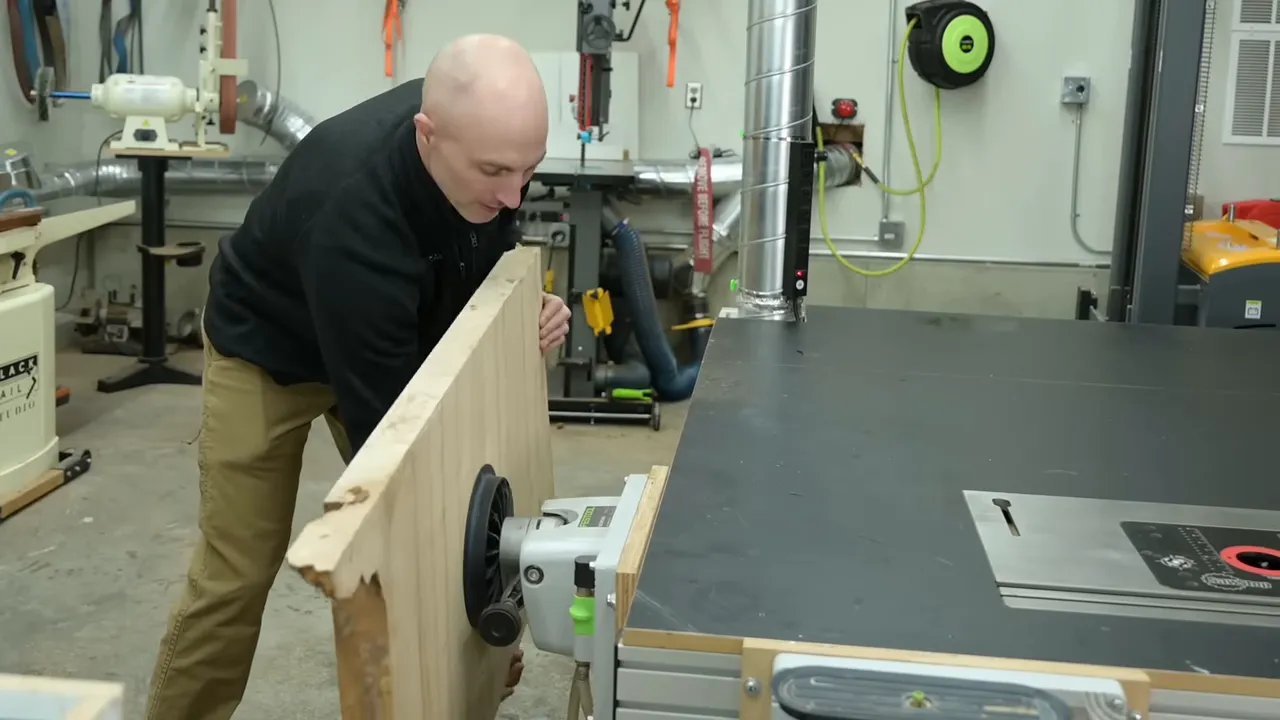
The interchangeable heads accommodate different workpieces, and the foot release makes changing parts quick. I believe each unit can hold roughly 75 pounds vertically, though that is my recollection rather than a substitute for checking the specifications for your setup.
The real benefit is how easily I can change the position of a workpiece. Flat, upright, small, large: the system takes a lot of the annoyance out of holding something while I work on it.
The Mafell Saw: Incredible Power, Questionable Value
My Mafell K85Ec saw is another expensive tool, but this one gets a more qualified recommendation.
With the track and accessories I own, the setup was about $2,000. The power is outstanding. It handles deep cuts that I could not make with my Festool track saw.
What I like less is the overall design. Festool tools usually feel as though someone thought through how every part should work together. Some details on the Mafell feel more like afterthoughts.
I like the saw. I am not convinced I like it enough to justify the price. If you need that cutting capacity, the power is the argument for it. If you do not, it becomes a harder purchase to defend.
Lumber Storage, Heavy Lifting, and Future Table Projects
I was skeptical of my homemade vertical lumber racks when I designed them. About a year later, I am happy with how they turned out.
They accomplish what I wanted them to accomplish. That does not mean I am about to patent the design and start a lumber-rack empire, but they get the job done in my shop.
The electric Apollolift forklift is useful too, when I can actually get it where it needs to go. Unfortunately, I have put enough stuff in this shop that navigating it has become difficult.
That is a fairly significant flaw in a layout: owning a machine that saves your back, then filling the floor space it needs to operate. I love the forklift when I use it. I just made using it harder than it should be.
Two Slabs I Am Excited About
One upcoming epoxy table starts with a huge, irregular wood cookie full of cracks and voids. It is the kind of piece that makes me excited about the finished result and much less excited about everything required to get there.
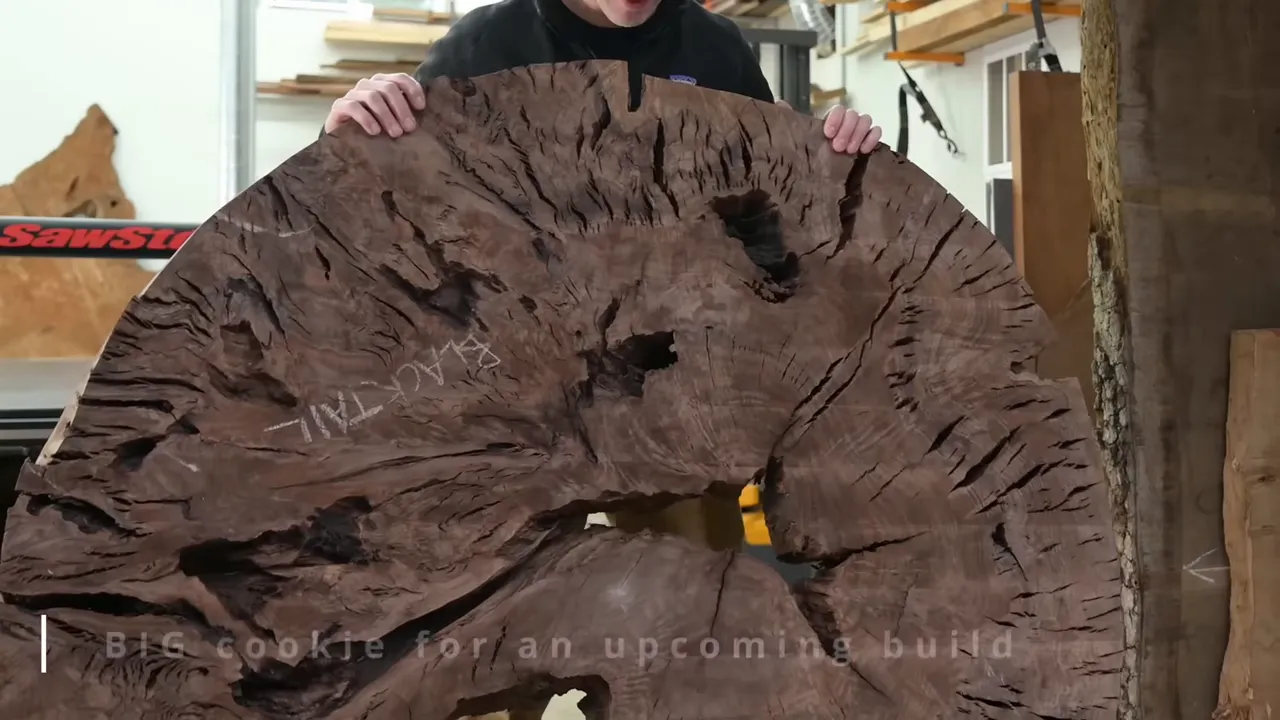
The other is an intensely figured old-growth redwood slab. To be clear, an old-growth redwood was not cut down for this project. The slab came from a log that had already been sitting for something like 50 to 100 years.
These are exciting materials, but wood and epoxy can get expensive before you have much to show for them. That is why I put together my epoxy table workshop. It covers the complete process from start to finish, with the goal of taking some of the uncertainty out of spending hundreds of dollars on a project.
|
Bandsaw, Jointer, and Planer: The Next Level of Woodworking
A bandsaw and a jointer are two tools I think make sense when you are moving beyond general DIY and home improvement into more involved woodworking. Not everyone needs them immediately, but they open up a lot of possibilities.
Laguna 14BX Bandsaw
My Laguna 14BX has 13 inches of resaw capacity, which is impressive for a 14-inch bandsaw. I like it, although I do not expect it to be the last bandsaw I ever own. There are details I would like to see improved.
The feature I absolutely love is the foot brake. There have been plenty of times when both hands were occupied supporting a piece of wood and reaching for a switch was inconvenient. Being able to shut the machine off and stop the blade with my foot is genuinely useful.
A bandsaw is one of those purchases that may get used more than you expect. At least, that has been my experience.
A Used Jointer That Gets the Job Done
The Shop Fox jointer came from Craigslist for around $800. It works fine, which is a respectable quality in an $800 machine.
The fence is not particularly good, and I could use more width. If I make one major machinery purchase over the following year, a 12-inch jointer is probably the leading candidate. If that happens, I may give the current one away.
My favorite jointer accessory is considerably less expensive: a roughly $7 concrete float that I use as a push block. I prefer it to the commercial push blocks I have tried.
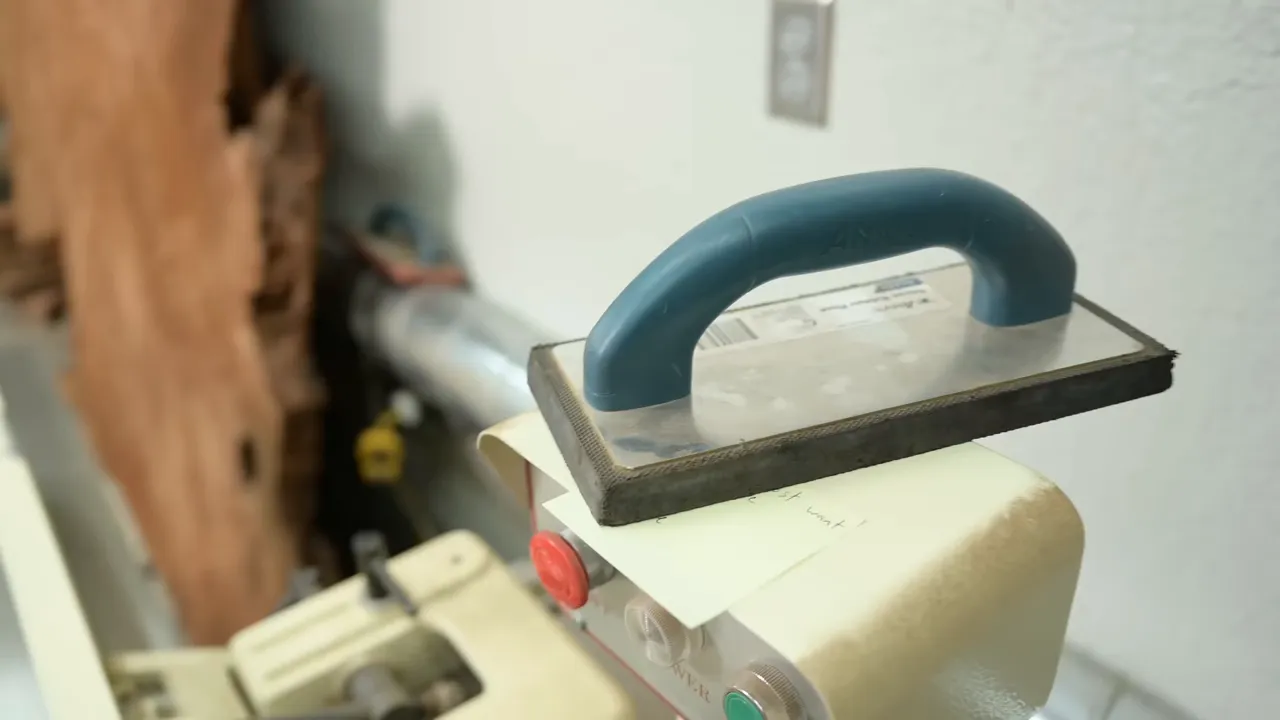
It is not a glamorous recommendation, but that is part of why I like it. Sometimes the cheap thing simply works better for me.
The Planer and Its Unfortunate Price History
My Grizzly 20-inch helical-head planer cost about $1,900 when I bought it new, roughly four years before this update. By the time of the tour, the price had climbed above $3,900.
That is a pretty depressing change for a machine I consider okay rather than amazing. It does its job, but at the higher price, my enthusiasm is limited.
Automatic Dust Collection Is an Upgrade I Really Like
The iVAC blast gates attached to my machines get a much stronger recommendation than the planer itself.
If you have not used automatic blast gates, the basic workflow is simple:
- Turn on the woodworking machine.
- The corresponding blast gate opens automatically.
- The system signals the dust collector to start.
- When you turn the machine off, the gate closes and the collector shuts down automatically.
I have these on essentially every power tool in the shop, in both 4-inch and 6-inch sizes. They take a repetitive chore out of using the dust collection system.
For broader background on why dust control deserves attention in a woodworking shop, OSHA’s wood dust guidance is a useful reference. My enthusiasm here is specifically for the convenience of having the collection system respond when I turn on a tool.
Shop Storage: Expensive Systems and Ideas Worth Stealing
Levrack: My Favorite Big-Ticket Organization Purchase
The Levrack storage system is probably my favorite major organization feature. It was about $4,000, so it is certainly not something I would call a budget-shop essential.
The shelving units hang from an overhead roller system, letting me slide them to access the contents. I keep finishes, extra sandpaper, consumables, shop rags, and other supplies in there. The shelf capacity is around 800 pounds, which is plenty for what I am putting on them.
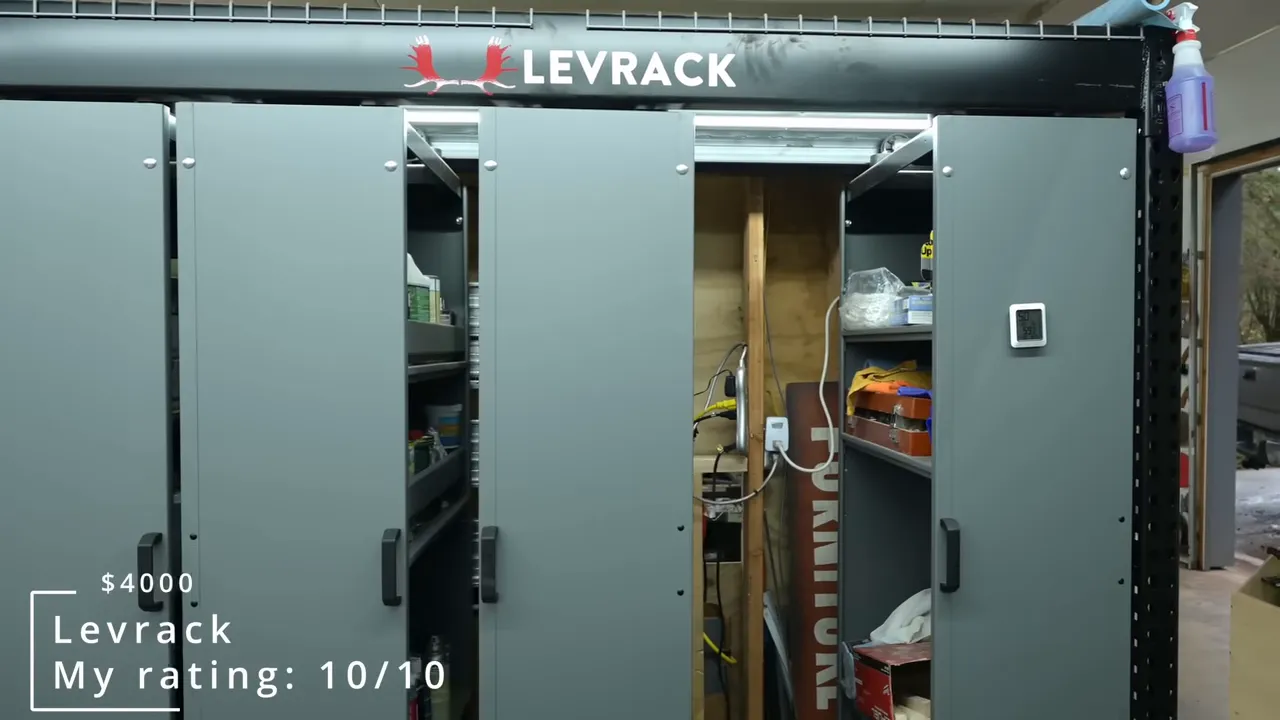
It brings a lot of supplies into one organized area. I love it. I also recognize that loving a $4,000 storage system is not especially helpful advice for someone outfitting a hobby shop on a tight budget.
The Hidden Cost of a Wood Stove
Making room for the Levrack required moving the wood stove from its original location. Moving it across the shop cost $2,500.
That is worth remembering if a wood stove looks like an inexpensive heating solution. Installation or relocation is only part of the picture. There is maintenance, insurance can cost more, and fuel is not automatically free just because you work with wood.
I do get some interesting sawdust briquettes from Creative Woodworking. Turning sawdust into usable firewood is a pretty cool way to repurpose it.
Wall Control Pegboard and Small-Tool Storage
The Wall Control metal pegboards have been great. They keep tools accessible above the workbench, and I highly recommend the panels.
The magnetic strips sold for them are a different story. They are expensive, and when I pull off something heavy, like a wrench, the strip itself sometimes comes along. That is not quite the quick-access experience I was hoping for.
Small magnetic bit holders, on the other hand, are a handy way to keep frequently used bits within reach. This is exactly the kind of little idea that can be useful without copying the whole shop.
The Workbench and Miter Station: Keep the Good Parts, Admit the Rest
The aluminum-extrusion workbench has some flex. If that bothers you, larger extrusion, like the stock used for my outfeed table, is an option.
The top has been a success. I used 1/4-inch black melamine as a sacrificial, replaceable surface, and it is holding up well enough that I have not replaced it yet. Eventually I will, but it has lasted longer than I expected.
Underneath is a Husky rolling tool chest that cost around $1,000. I love having it fit beneath the bench, and the soft-close drawers are a nice feature. The whole arrangement is covered in more detail in my workbench and miter station build.
The Bosch Miter Saw Is Just Okay
My 12-inch Bosch miter saw is fine. I do not hate it, but if I were buying again, I would probably choose something else.
I added a Festool hold-down clamp to secure workpieces and help keep my hands farther from the blade. I am happier with that addition than I am with the saw itself.
Hand Tools I Would and Would Not Buy Again
There is no reason to pretend everything hanging on the wall is a favorite. Here is the honest version:
- Stanley Sweetheart chisels: I have been very disappointed in these and do not recommend them.
- Woodcraft Japanese saws: Just okay in my experience.
- Narex chisels: I absolutely love these.
- Milwaukee M18 brad nailer: Another tool I absolutely love.
- Japanese pattern-welded chisels: A recent purchase that I am excited about. They are beautiful, though this is more admiration than a long-term performance verdict.
Upstairs Storage and a Staircase I Would Like to Build
The upstairs space could make a cool office someday, but the ceiling is low enough that I can only stand fully upright near the middle. For now, it is mostly offcut storage.
The project that interests me more is replacing the stairs with a mono-stringer, timber-frame-style staircase. That is on the list of things I would like to tackle, not something I can claim is already underway.
My Favorite Nearly Free Shop Upgrade: Sander Storage
Before I built wall storage for the sanders, they mostly got kicked around underneath the outfeed table. Now each one has a specific home.
The holders are simple wooden brackets mounted to the wall. There is nothing especially complicated about them, and that is the point. They solve an annoying problem without becoming a project that takes over your life.
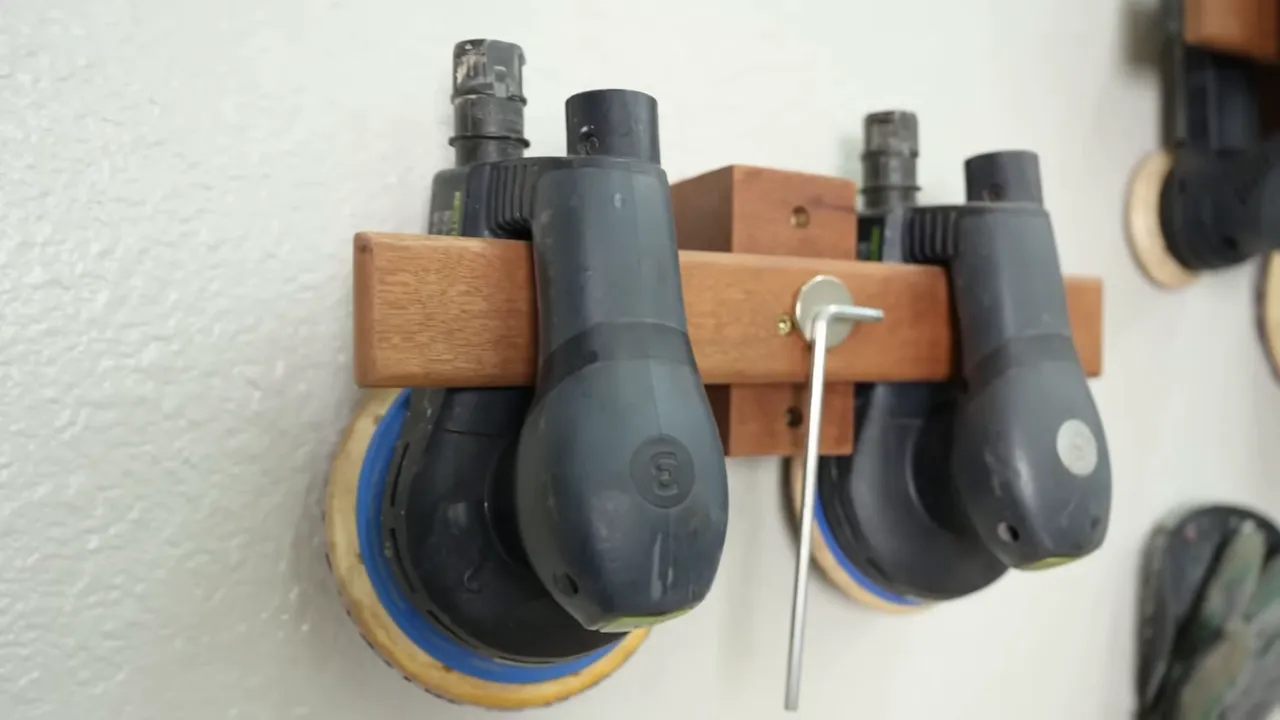
A magnet holds the Allen key at the rack. I use the same idea for the drill press chuck key, so there is no string or leather strap dangling from the machine.
If you take one inexpensive organization idea from my shop, this is a good candidate. Copy it. I would much rather have the sanders here than under the table.
The Wall-Mounted Vise and Its More Useful Accessory
For reasons I genuinely cannot remember, I insisted on wall-mounting my vise. It works okay. I just cannot explain why I was so determined to do it.
The soft jaws are easier to recommend. Most of what I grip is fairly soft, so the inexpensive jaw covers pretty much live on the vise. They have been a useful addition even if the mounting location was an oddly specific personal ambition.
LED Shop Lighting Was Cheaper Than Retrofitting the Old Fixtures
When I moved in, the shop had dim, yellow fluorescent lighting. Several people suggested converting the existing fixtures to LED.
For my shop, buying and installing new LED strip lights cost less than half as much as converting those fluorescent fixtures. The improvement did not require an expensive specialty lighting package.
I also had lighting companies offer to pay me to install their products. Their lights were around five times the cost of the ones I found on Amazon. Knowing how well the inexpensive lights worked, I could not justify promoting the more expensive option.
The lesson is not that every inexpensive light is good. It is that replacement can be cheaper than conversion, so it is worth pricing both before committing to a shop lighting upgrade.
Clamp Storage: My Homemade Rack Lost to a Smaller Footprint
In my previous shop, I built a rolling clamp rack with integrated Festool track storage. I thought it was pretty clever.
In this shop, it stuck too far out from the wall. So I swallowed my pride and replaced it with a wall-mounted Woodpeckers rack that accomplishes essentially the same job in much less space.
That is one of the more useful lessons from this layout: a storage solution can be well built and still be wrong for the room.
The old rack did not go to waste. It now lives in the attached shed, holding yard tools and a few pipe clamps. A slightly less prestigious assignment, but still useful.
The Attached Shed: A Good Home for the Dust Collector
My dad and I built an attached shed for the shop. More accurately, my dad built an attached shed for the shop, and I would like some of the credit.
We used a concrete slab foundation, stick-framed the walls, and matched the shed roof pitch to the shop. The finished addition looks right with the building and works well. The attached shed build covers that project.
The shed now houses my Oneida 5-horsepower Dust Gorilla Pro with Smart Boost. I have no complaints about that dust collector. It works extremely well.
The air compressor is a much less exciting purchase: an old, secondhand 5-horsepower Craftsman. I have no plans to replace it. It still compresses air, which remains my main requirement.
The Shop Expansion That the County Said No To
Ever since moving here, I have been planning an expansion.
The proposal was to extend the shop about 25 feet across its full width and add a walkout basement. That would create roughly 1,000 square feet downstairs and another 1,000 upstairs, taking the existing approximately 1,200-square-foot shop to more than 3,000 square feet.
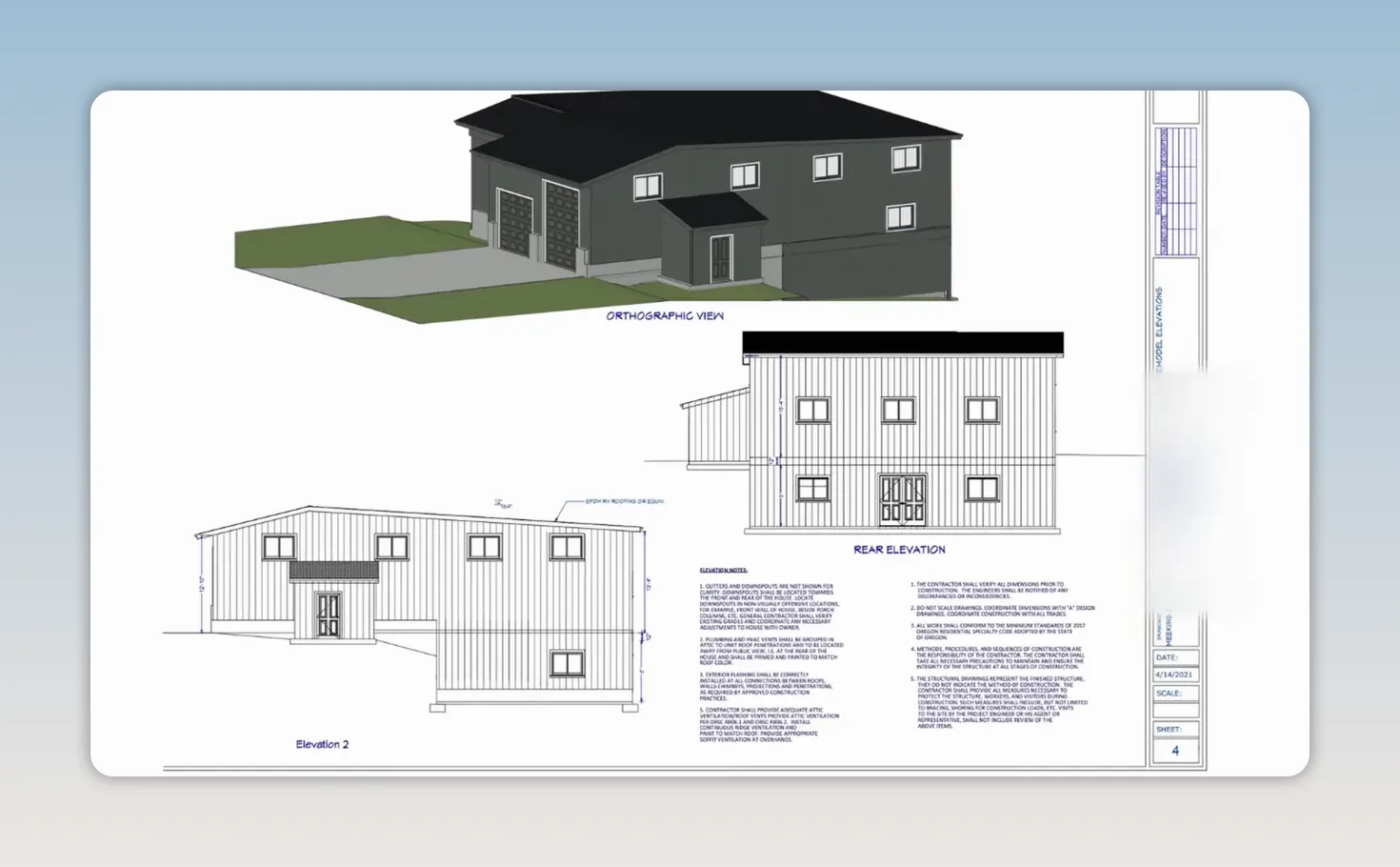
I had an engineer draw the plans. I hired a contractor. I put down a deposit. Then the county said no.
We went back to explain the proposal again. They appreciated the explanation. The answer was still no.
So the expansion remains unresolved. In the meantime, the shop has to function within the space I actually have, not the space I had already mentally filled with more tools.
After fourteen months, that is probably the biggest lesson here: the best shop is not the one with the most equipment. It is the one where the equipment, storage, and available space work together. Sometimes that means buying a tool I love. Sometimes it means hanging sanders on a couple of wooden brackets. And sometimes it means admitting that my very clever clamp rack belongs in the shed.


